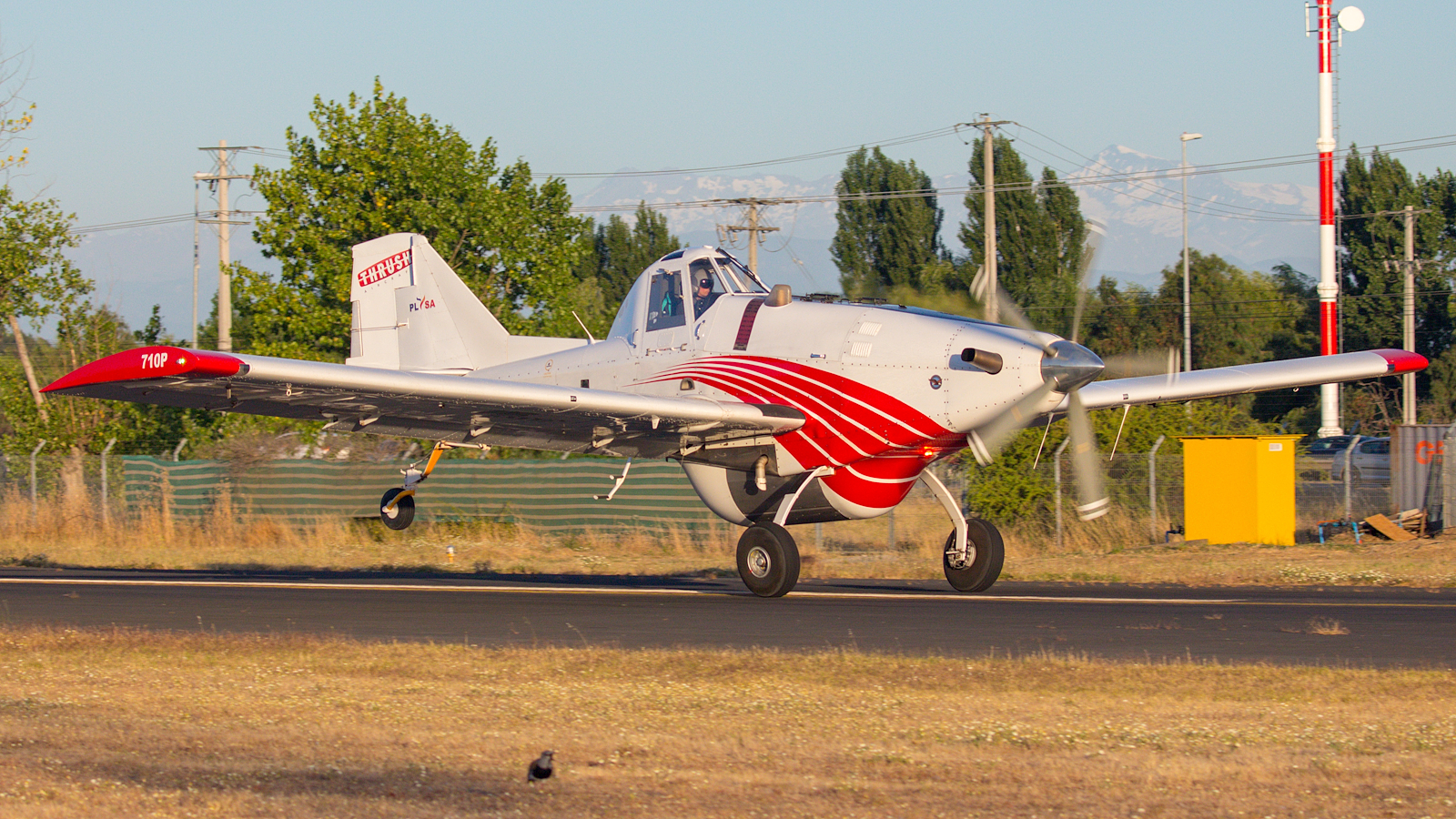
In preparation for the 2024/2025 wild fires season, Chile’s National Forestry Corporation (Corporación Nacional Forestal, CONAF) officiallly acknowledged deployment of 36 fixed-wing and 41 rotary-wing aircraft throughout 12 regions where events are expected to occur between December 2024 and April 2025.
CONAF, a Chilean government agency under the Ministry of Agriculture, is responsible for overseeing and managing the country’s forest resources and protecting them from various threats, including wildfires, which are a recurring natural disaster due to the country’s dry climate, particularly during the summer season (December through March).

The organization works in close cooperation with the National Service for Disaster Prevention and Response (Servicio Nacional de Prevención y Respuesta ante Desastres, SENAPRED), which plays a coordinating role during wildfires, integrating resources and efforts from CONAF and other organizations, ensures logistic support, communication, and allocation of additional resources from regional and national levels and may declare states of emergency and call upon the military or international aid to support CONAF’s efforts in severe emergencies where fire threaten populated areas.
Master plan
According to information supplied in replies to citizen inquiries, CONAF’s 2024-2025 Air Operations Plan (Plan Operativo Aéreo Período 2024-2025) is deploying two large air tankers, 26 tankers (adapted crop sprayers), four coordination and four surveillance aircraft plus 41 helicopters (comprising 19 light, 15 medium, six semi-heavy and one heavy units).

Interestingly enough, only three (Air Tractor AT-802) aircraft are actually owned by CONAF itself: The remaining 74 aircraft were contracted through international tenders and come from the Chilean (34 aircraft), Spanish (12), Argentine (10), United States (8), Canadian (3), Austrian (2), Bolivian (1), Brazilian (1), German (1), Peruvian (1) and Uruguayan (1) civil aircraft registers.
Aircraft in this “baseline plan” are ostensibly deployed in their assigned operating bases and have started dealing with a variety of low, medium and high priority events in areas where wild fires have already been recorded in by media, CONAF and SENAPRED.
Geographical distribution

Nearly 50% of the fleet is allocated to the Central and Souther Chile macro zone comprising the O’Higgins, Maule, Ñuble and Biobío regions, totalling 38 aircraft distributed in 21 locations.
Next comes the Central Chile macro zone, comprising the Coquimbo, Valparaíso and Metropolitan regions, distributing 21 aircraft in 12 locations.

Southern nacrozone, comprising the Araucanía, Los Ríos and Los Lagos regions, records 14 aircraft distributed among nine locations.
Purportedly the least threatened one, Austral macrozone comprimse the Aysén and Magallanes regions and records only four aircraft distributed among four locations, including the ever fragile national park Paine Towers (Torrel del Paine).

According to a detailed Pista 18 survey, the fleet comprises 20 Air Tractor AT-802, four TECNAM P2006, three Cessna 337, three Dromader, three Turbo Thrush, one Boeing 737, one C-130 Hercules and one Vulcanair P68 aircraft plus 18 Airbus Ecureuil, six Bell 212, four Airbus Super Puma, four Bell 205 four Bell 412, two Sikorsky Blackhawk, one Airbus H130, one UH-1D Iroquois and one Boeing-Vertol Chinook.
Not accounted for in CONAF’s documentation but included in the survey above is Citation II N550CG, which operates in Boeing 737 “TANKER 7” guidance duties using call sign “GUIA 1”.

Knowing that 99.9% of Chilean wildfires are attributed to intentional or accidental human intervention, CONAF launched a mass and social media campaign boasting that “preventing a forest fire is easier than fighting one”.
This massive aircraft deployment and the US $158.000.000 national action plan that it is called to support are a clear government commitment to promptly activate integrated assets when actual wild fires erupt.
Acknoledgement: Claudio Cáceres Godoy contributed proofreading for this chronicle. References: Chile’s Presidential Office, CONAF, SENAPRED and Wikipedia. This story also used public domain information retrieved with artificial intelligence solution, ChatGPT.

