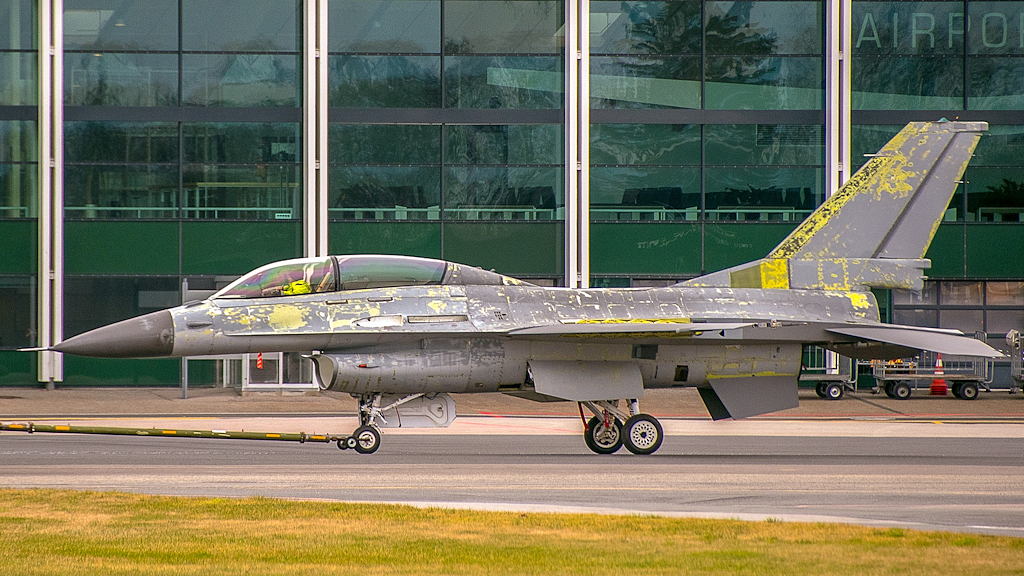
The Minister of Defense, Luis Petri, visit to Tandil air base for the “F-16 Weapons System Reception Ceremony” acquired last year for the Argentine Air Force (FAA) provides an ideal time frame for our first complete forecast of the the 24 Royal Danish Air Force (RDAF) airframes that will start joining the South American nation’s VI Air Brigade (VI Br Aé) fleet later this year.
 Official information is definitely unavailable, in part due to Argentina declaring the acquisition a “military secret”; but mostly because its Danish supplier seemingly intends to keep aircraft deliveries to Ukraine absolutely under wraps (and both deals are being supplied from the same pool).
However, comparing, fusing and analyzing publicly available information from a qualified list of resources and authors, we’re reasonably certain that 22 airframes are “safe bets” for delivery to Argentina, while the remaining two will come from a pool of nine least expected aircraft.

Methodic guess work
Research started out by obtaining an inventory of 44 F-16A/B mid-life updated airframes current with the RDAF in early 2024.
Then, we tried to identify aircraft which may have (or have already) been supplied to Ukraine, this turning up a total of 12 serials in said condition (an unexpected byproduct of our research).
Next, the eight F-16B two-seaters proposed by Marcelo Cimino in Full Aviación in January last year were revalidated after two aircraft were handed over to Ukraine and only eight remained available… easy piecy!

Lastly, an attempt was made to guess the twelve F-16A single seaters destined for Argentina, and we did it by sorting all remaining aircraft in two groups with different perceived probabilities to cross the Atlantic Ocean.
The most likely one (50% probability) is made up by 14 aircraft wearing Have Glass V colour scheme or coming from the most modern aircraft batch accepted by RDAF in the mid-1980s.

Have Glass V is a ferromagnetic paint scheme covering most of the aircraft fuselage (but the dielectric radome) with a distinctive dark gray (FS36170) finish which purportedly reduces the fighter’s radar cross section from 5.0 m² to 1.2 m².
The remaining lot (25% probability) is made up by nine aircraft which fit none of the above pre-requisites, but could nonetheless be selected if their general condition is much better than some of our preferred choices.

As marked at the top and justified in our speculative approach to two thirds of the fleet, this is not a definitive report but “research in progress”: Additional information will be incorporated into this chronicle as and when it becomes available.
Feel free to leave your comments below if you have remarks or corrections to our research: We may contact you privately to validate your feedback and eventually incorporate it in this report.

References: Air History Net, Full Aviación, F-16 Net, Key Aero, The Aviationist, The War Zone and Scramble were consulted by the author. Per Thorup Pedersen and Andrés Rangugni provided valuable guidance during our research.


What was the purpose of Minister Luis Petri’s visit to Tandil air base, and why is it significant for the Argentine Air Force?