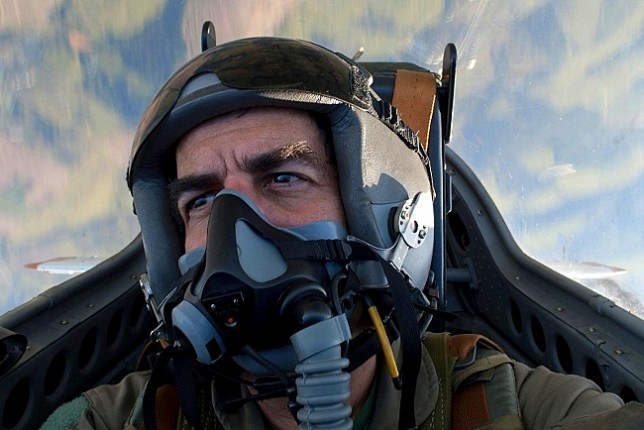

It was with shock and a profound sense of loss that I learnt US/Brazilian aviation journalist and historian, Jackson Flores Jr., died in Rio de Janeiro (Brazil) on Saturday 29 June 2013 due to a rampaging heart attack. The son of a Brazilian diplomat and a high-society heiress, Jackson was born in New York City in 1959 and spent his early years in the Big Apple due to his father’s assignment to that location. From personal memory notes, he moved to Brazil with his divorced mother and went on to complete elementary, middle and high school studies at the Graded School, a private educational institution following an American curriculum yet accredited both in the United States and Brazil. There, Jackson would nurture and evolve his exquisite command of the English language, exercise his powerful intellect in a demanding academic environment and let his rowdy child personality get him into the principal’s office every now and then! Friend’s comments indicate that it was in his teen age when Jackson was first bitten by the aviation bug.

By the time we first met in Buenos Aires in mid-1985, he was a promising historian and writer and was then working as a researcher at the Brazilian Aerospace Museum in Campo dos Afonsos, in the outskirts of his beloved adoptive home town, Rio de Janeiro. He spent a couple years living in Buenos Aires (Argentina) in the mid-1980s, writing for a number of international aerospace publications and giving native English classes at Berlitz, but his Brazilian roots were much too stronger so he returned to Rio de Janeiro, where he settled down for good in the late-1980s. The remainder of his biography is a bit sketchy to me, but he went on to become a leading contributor to several Brazilian and international publications and media, including Força Aérea magazine, FL330.com, Flight International and Flightglobal.com. He also authored at least two Brazilian aviation books, “Aviação Brasileira – Sua História Através da Arte” (Brazilian Aviation History through Art) and “Brasil – Infraestrutura Aeroportuária” (Brazilian Airport Infrastructure), and earned himself at least four Santos Dumont Brazilian aviation journalism prizes.

Though we parted company close to 20 years ago and met for the last time in FIDAE 2006, I keep the fondest memories of Jackson. Back in the mid-1980s, while he was in his short “Argentine stint”, we spent a highly productive and entertaining year launching the experimental spotting publication, LAW/Latin American Wings (one of the many links Gaceta Aeronáutica’s DNA!). Even though he was a foreigner trying to fit into Argentina’s tumultuous culture, he proved to be an easy to engage kind of guy. This helped get the project up and running in no time and with amazing mutual understanding… of course, once we abandoned his Spanish, my Portuguese and a transitional “Portunhol” and agreed to do the whole work in English! Though his involvement in LAW was curtailed to only one year due to an incident with Mariano Moreno Air Base security, he was instrumental in giving the magazine a style and personality that lasted throughout the years and survived the change to a Spanish-language configuration, LAW en Castellano, in 1988.

On a more personal note, I believe Jackson was a key influencer in my spotter, historian and journalist career and education. Not only did he advanced my knowledge on the basics of international military aviation standards and history, he also challenged me intellectually by proposing a diversity of English-language readings, from prestigious US and British aviation magazines to British spotting bulletins, from military fiction novels to Cold War espionage testimonials. He also provided intensive native English training at no extra cost (other than our society at LAW!) and introduced me to the fascinating universe of Brazilian military aviation, from its early formative years to the Second World War campaigns in Italy and the Atlantic to the modern force structure and systems of the 1980s. His lessons remain valid to the present day and are living proof of his balanced writing style and impressive technical background, as attested in many of his Brazilian obituaries!

An enthusiastic connoisseur of the Brazilian campaign in Italy, he would adopt the expeditionary force call sign “Jambock” for a nickname (thus the title for this obituary). But his fascinating sense of humour, an exotic mix of US and Brazilian wisecracks (may I add a touch of Argentine “spice” to the recipe too?) led him to supersede it with the more ironic, yet cryptic, “fubar” (for “fucked-up beyond all reason”)… All things said, Jackson was laid to rest at the João Batista cemetery in the district of Botafogo, a distinguishing icon of his beloved Rio de Janeiro, on Sunday 30 June.
Farewell editorial partner, friend and mentor! May God let you go on enjoying “cambalhotas aéreas” (Brazilian aerobatics) up in Heaven!
Edison Ávila Martins contributed to this report. Additional references were obtained from C&R Editorial, Graded (the American School of São Paulo), Poder Aéreo and Premio Santos Dumont de Jornalismo.

