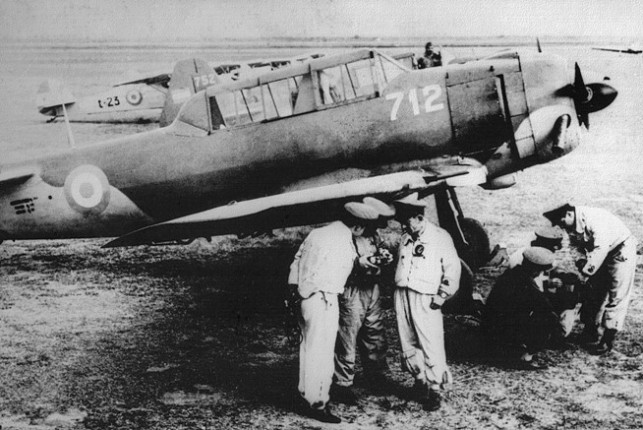

Argentina’s armed services have been testing their flying components’ operational capabilities since the first few years of Argentine military aviation in the 1910s. The earliest evidence of aircraft participating in a military exercise dates back to April 1914, when four fragile “aeroplanes” flown by the Military Aviation School logged 30 hours in 54 sorties while taking part in Army manoeuvres carried out in Southern Entre Ríos Province. Since then, Argentine military exercises have evolved significantly, from yearly Army and Navy manoeuvres in the first half of the 20th Century to the complex and multidisciplinary exercises taking place in the last few decades. After the 1982 Malvinas War, military exercises started increasing the quantity of participating flying elements, from a natural 100% in Air Force integration, dissimilar air combat training and combat search and rescue exercises to lower levels in national and international ground and sea combat, peace keeping, border control, maritime patrol, anti-submarine warfare, disaster relief, natural resources protection and other applications.

Beyond their specific missions or scope, Argentine military exercises are formally classified in three broad categories, depending on the composition and origin of the participating forces. In a classification we understand was adopted in the second half of the 20th Century, these comprise:
- Specific (or internal): Units from a single service are involved. They are planned, coordinated and executed by either of the armed or paramilitary services.
- Joint (or national): Units from two or more services are involved. Particularly since the early 21st Century, they are being increasingly planned and coordinated by the Joint Chiefs of Staff.
- Combined (or international): Units from at least one Argentine and one foreign service are involved. Planning and coordination can be conducted by the host nation and service or by a multi-national committee, depending on each particular exercise.
While specific and joint exercises need no special government authorization, combined exercises are legally subject to congressional approval. If an international drill is to take place in Argentine soil, authorization is required for foreign troops and weapons to enter and operate into the country. If it is to happen abroad, Argentine troops and their weapons must be authorized to temporarily leave the country.

The summary table below provides links to our yearly Argentine military exercises indexes indexes (“Project ARGEX”), where more detailed information will be made available over time for every calendar year’s training events (previewing the contents of each index, the quantity of exercises recorded is listed between parenthesis). Just like the remainder of Aeromilitaria Argentina contents in Gaceta Aeronáutica, this is expected to be a community project where contributor, reader and visitor inputs will always be welcome (you may contact us by entering your comments below or via Facebook).
|
Annual indexes
|
|||||||||
|---|---|---|---|---|---|---|---|---|---|
|
1991 (-)
|
1992 (-)
|
1993 (-)
|
1994 (-)
|
1995 (-)
|
1996 (-)
|
1997 (-)
|
1998 (-)
|
1999 (31)
|
2000 (39)
|
|
2001 (-)
|
2002 (20)
|
2003 (33)
|
2006 (-)
|
2007 (-)
|
2008 (-)
|
2009 (-)
|
|||
Sources: This story was initially published by Aeromilitaria Argentina.

